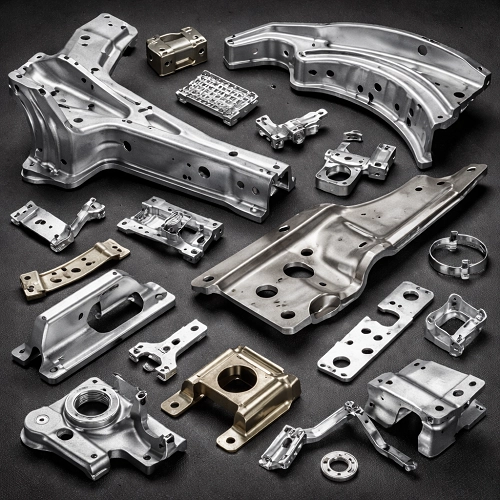
Metal stamping plays a vital role in today’s automotive manufacturing industry. It is a highly efficient and precise process used to shape flat metal sheets into functional automotive components. By utilizing custom-designed tooling and high-tonnage presses, manufacturers can produce consistent, high-quality parts that meet strict automotive standards for accuracy, strength, and durability.
As vehicle designs become more complex and performance requirements increase, metal stamping remains a preferred manufacturing method due to its ability to support tight tolerances, repeatability, and high-volume production.
Modern automotive metal stamping has evolved significantly with the integration of advanced machinery and automation. Progressive die stamping, deep draw stamping, and transfer stamping are widely used to create intricate components efficiently and reliably. Automated feeding systems and robotic handling further improve production speed while minimizing human error.
Today’s stamping processes can accommodate a wide range of materials, including carbon steel, stainless steel, aluminum, and high-strength alloys. This flexibility allows automotive manufacturers to meet lightweighting goals without compromising structural integrity or safety.
Metal stamping is used to manufacture a broad variety of automotive components for both OEM and aftermarket applications. These stamped parts contribute to the vehicle’s structure, performance, and safety systems.
The ability to produce these parts with consistent quality makes metal stamping a cornerstone of automotive assembly operations.
The global automotive industry continues to experience strong demand for stamped metal components. This growth is driven by increasing vehicle production, the rise of electric vehicles, and ongoing efforts to reduce vehicle weight and improve fuel efficiency.
Metal stamping supports sustainable manufacturing by minimizing material waste and enabling cost-effective mass production. As tooling technology, automation, and material science continue to advance, metal stamping will remain a critical process for producing next-generation automotive components.
Metal stamping is an essential manufacturing process that supports the efficiency, reliability, and scalability of automotive production. From structural components to safety-critical parts, stamping delivers precision, consistency, and cost efficiency. As the automotive industry continues to evolve, metal stamping will remain a key contributor to innovation and high-performance vehicle manufacturing.